Memoir writing can be very therapeutic, especially for those who have experienced the most. Telling the story of one’s life can bring a sense of closure, accomplishment, and peace. For others, it is an opportunity to document a life fully-lived and to leave a legacy, or simply knowledge, for loved ones.
As well as being the owner of The Beat Retreat, the founder is also a professional book editor and ghostwriter, helping people from all over the world write their memoirs. This course is designed to help you write your own story.
If you can talk, you can write. Writing is just talking on paper! Memoir writing is about YOUR voice; YOUR vocabulary; YOUR vernacular.
The next ‘Talking on Paper: Writing Your Memoirs” course begins on Monday January 8th. The first session is free, so you can assess content, and me! It costs just 50 GBP to continue the whole course. The link for the first session at 7pm UK time/8pm in Europe/3pm in New York is here: https://us02web.zoom.us/j/84759880832
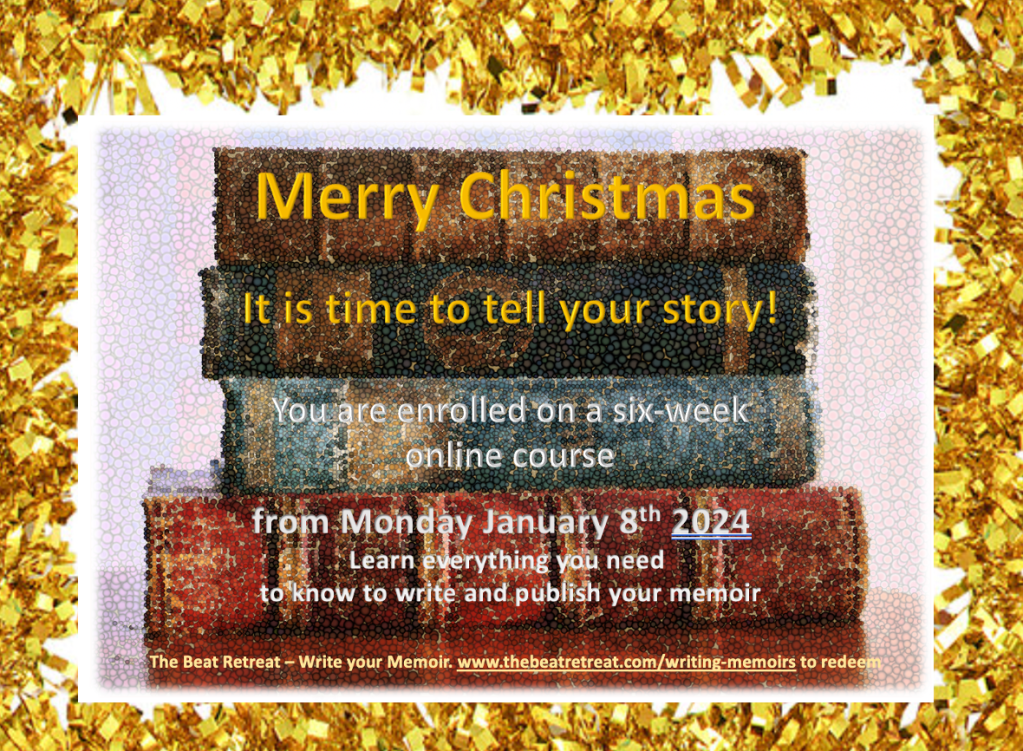
If you have a Christmas gift to redeem, please do join this link on Monday January 8th 2024, at the time listed above, and send an email with your gift certificate to beatretreathypnotherapy@gmail.com.
Everybody who is registered for the course will also receive a recording of each seminar immediately afterwards.
If you have been meaning to write your memoirs, but you have been waiting for a push to get started, here is that push.
There will be plenty of time for discussion and appraisal of ideas and writing from course participants, as well as instructor/group feedback if required/appreciated.
See the contents of the course below, and if you have any questions please email beatretreathypnotherapy@gmail.com.
Identifying Your Target Audience
- Why do you want to write your memoirs?
- Who do you want to read it? Family/colleagues or a bestseller audience?
- Why do you want to write it now? Is it topical? What is your competition?
- Identifying the message you wish to put across in your memoir.
- Tailoring the contents to your audience – confessional, professional, transformational etc.
- The pitfalls of memoir writing – the 10 most common mistakes.
- Memoir versus autobiography.
How To Get Started
- ‘Talking’ on paper – ‘Now I am going to write,’ is daunting. ‘Now I am going to talk,’ is not so daunting.
- Should you write or record? Pen or computer?
- Creating your authentic voice.
- How to test your story out on others.
Where To Begin
- Start from anywhere.
- Identifying the key moments.
- Compiling a Memory List.
- Recognising a theme.
- Plotting.
- Chronology.
Organizing to write
- Finding a place to write.
- Identifying a time and method to write.
- Daily writing target – a fixed length of time or set number of pages. Advantages and disadvantages.
- Next day rewriting. Is it helpful?
- Overcoming procrastination.
Choosing Your Point of View
- First person.
- Third person limited.
- Third person omniscient.
Choosing Your Tense
- Pick one.
- Don’t tense hop.
- Present tense or past tense.
- Examples where it doesn’t work.
Choosing Genre
- Diary.
- Anthology of short stories.
- Personal essay.
Choosing Title
- Don’t! Choose a working title.
- Your title is more likely to become obvious as the book progresses.
Emphasis on grammar
- The need to be understood.
- Making grammar personal.
- Use of vocabulary.
- Exploring the craft.
First draft
- Expected length/word-count.
- Forget perfectionism. Ernest Hemingway said: “The first draft of anything is shit.”
Researching
- Refreshing your memory.
- Studying the era.
- Identifying props.
- Remembering music.
- Organisation of information.
- Researching your genre.
Engage Your Audience
- Authenticity – making the reader care.
- Intimacy – inviting them in.
- Avoiding alienation of the reader.
- Effeactive use of bad language.
Story telling
- Characters and character arcs.
- Action.
- Suspense – cliffhangers.
- Entertaining.
- How to incorporate flashbacks.
- Exploring Perspective.
- Choosing the first chapter.
Grammatical Rhythm
- Pacing.
- Simple and complex sentences.
- Speed and Cadence.
- Parallelism.
- Verbs – passive and active.
- Use of adverbs.
- Punctuation.
Narrative or Dialogue
- Finding the balance of communication.
- Storytelling through dialogue.
- Using description.
- Inner speech and outer speech.
- Mood – negative and positive.
Overcoming Writers Block
- Scattergun writing.
- Stream of consciousness.
- Eliminating overthinking.
- Best tips.
Writing with accents
- Making it realistic.
- Making it intelligible.
Overwriting
- Purple prose. Also blue and beige prose.
- Avoiding excessive detail.
- Scene streamlining.
- Underwriting.
Revising your draft
- Finish it, leave it, revisit it.
- Read your writing out loud.
- Spotting inconsistencies.
Dealing with Emotions
- Memoirs as therapy.
- Objective interpretations.
- Overcoming sorrow/regret.
- Healing through writing.
- Using journaling – writing as mindfulness.
- Support network.
When to End
- Information overload.
- Less is more.
- The ‘perfect out’.
- Tying up all ends/coming full circle/completing the theme.
- Twist in the tale.
- Epilogues.
After Effect
- Lasting impression.
- Memorable character/information.
Overcoming Self-Doubt
- The inner critic.
- Seeing through the worry.
- Avoiding comparisons.
- ‘Imposter Syndrome’.
Family Opinions
- When to share your work.
- Using other people to spot inconsistencies.
Legal considerations
- Libel.
- Invasion of privacy laws.
- Assumption and opinion.
- Truthfulness.
- Changing identifying details.
- Proving public interest.
Final Edit
- Proof-reading – personal or professional?
- Does it flow?
- Is it ‘on message’?
Writing a Synopsis
- Your succinct sales pitch.
- Creating the basis of all your ‘marketing’ tools.
- The ‘Story Hook’.
- Distilling the key points of the challenges, the journey, the conclusion.
- Effective use of the active voice in the third person.
E-Printing Templates
- The best e-publishing tools available.
- Creating the right format file.
- Use of visuals.
- Optimising per device.
E-Publishing
- An overview of each platform.
- Costs – DIY or assisted.
- ISBN – Do you need one?
- Making an audio book.
- Cover design resources.
- Pricing.
Print Publishing
- Publishers and agents.
- Researching your market.
- Self-publishing.
- One-at-a-time print runs.
- Traditional book sales.
Marketing
- Target markets
- Inventory placing
- Free publicity
- Endorsements.
- Marketing tools
- Social media for authors
 The Beat Retreat